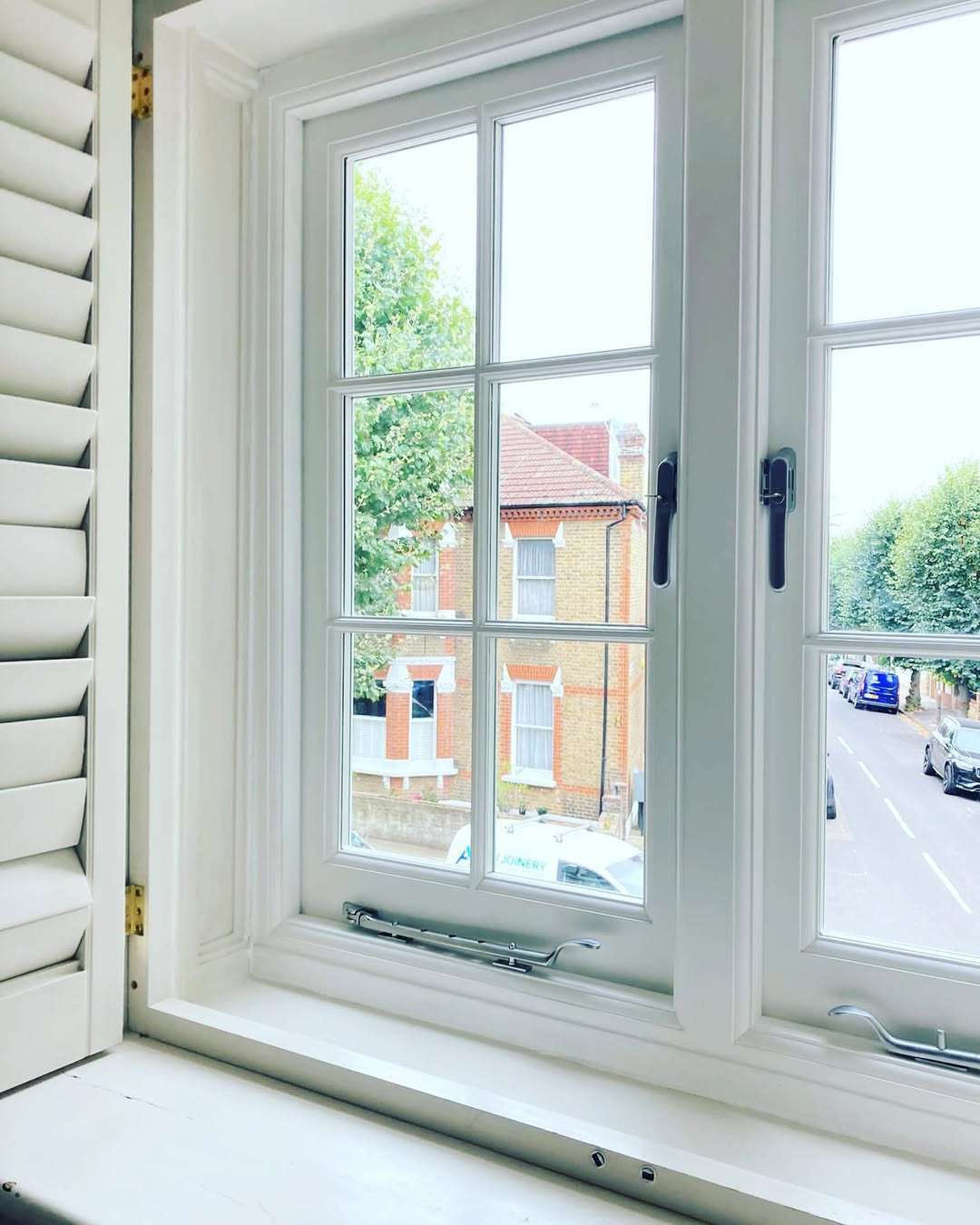
London's Victorian terraces and townhouses contain some of the finest timber sash windows ever built. Constructed between 1837 and 1901, these windows define the character of millions of London properties — from Fulham's Edith Terrace to the grand stucco facades of Kensington. Yet many are draughty, failing, or have already been replaced with inferior units. This guide covers everything you need to know about Victorian sash windows — what makes them special, how to maintain or replace them, and how to navigate conservation area planning rules in London.
What Defines a Victorian Sash Window?
Victorian sash windows have several distinctive characteristics that set them apart from other window types:
- Double-hung sliding mechanism — both sashes slide up and down, counterbalanced by lead weights on sash cords inside the box frame
- Slim glazing bars — early Victorian windows divide each sash into 2–6 panes with slim timber glazing bars; later Victorian windows (post-1870) often use a single large pane as plate glass became cheaper
- Horn detail — a distinctive joinery feature at the meeting rail, introduced after 1870 to reinforce the mortice joint when larger single panes were used
- Tall, narrow proportions — Victorian windows are typically taller than they are wide, with a 2:1 to 3:1 height-to-width ratio
- Painted softwood or hardwood frames — almost always white-painted in the period; original unpainted Victorian sash frames are extremely rare
- Box frame construction — the frame conceals the sash weights, cords and pulleys inside hollow box-section jambs
"The Victorian sash window is one of the finest pieces of domestic joinery ever devised — elegant in proportion, simple in operation, and extraordinarily durable when properly maintained."
Victorian Sash Window Styles Across London
Not all Victorian sash windows are the same. London's period properties span several distinct phases:
- Early Victorian (1837–1870) — multiple small panes per sash, 6-over-6 or 4-over-4 configurations, very slim glazing bars
- Mid-Victorian (1870–1890) — introduction of the horn detail, larger panes, 2-over-2 common in Fulham and Chelsea terraces
- Late Victorian (1890–1901) — single large panes over single large panes (1-over-1), very clean sight lines, often found in Hammersmith and Wandsworth
- Edwardian transition (1901–1910) — technically post-Victorian but often grouped with Victorian by conservation officers; frequently features margin lights with coloured or leaded glass
Need Victorian sash windows in London?
We replicate original profiles exactly. Free survey, written quote in 48 hours.
Can You Double Glaze Victorian Sash Windows?
Yes — and this is one of the most common projects we carry out at A&J Joinery for Fulham and London period properties. The key is using slimline heritage double-glazed units rather than standard thick double-glazed units.
Standard double-glazed units have a 28mm overall thickness that won't fit within Victorian sash rebates. A&J Joinery manufactures its own slim 14–20mm sealed units in-house, using a narrow warm-edge spacer bar and low-e glass. Fitted into new sash sections machined to the original Victorian profile, the result is:
- Thermally efficient double glazing reducing heat loss by 50–65%
- Correct Victorian proportions maintained — glazing bar widths and rebate depths match the original
- Visually identical to original single-glazed sashes from street level
- Acceptable to most London conservation officers as a like-for-like replacement
- FENSA certified on completion
Victorian Sash Window Costs in London (2026)
Softwood Victorian sash window (double glazed, supply & fit)£900 – £1,800
Hardwood Victorian sash window (double glazed, supply & fit)£1,500 – £2,800
Accoya® Victorian sash window (50yr rot guarantee)£1,800 – £3,200
Draught-proofing existing Victorian sashes£200 – £450/window
Sash cord replacement£100 – £200/window
Planning Permission for Victorian Sash Windows in London
This depends on whether your property is in a conservation area or listed:
- Standard residential property — like-for-like replacement is usually permitted development. No planning application needed as long as the replacement matches the original in material, design and finish.
- Conservation area property — like-for-like replacement is often permitted development, but changes to materials, glazing bar profile or design require a planning application. Most London boroughs require timber replacement, not UPVC.
- Listed building — Listed Building Consent is always required for any change to windows, even like-for-like. A&J Joinery manages this process end-to-end including heritage impact statements.
A&J Joinery assesses your planning situation during your free survey and manages any required applications with the relevant London borough at no additional charge.
A&J Joinery TipAlways replace Victorian sash windows with timber, not UPVC. UPVC cannot replicate the slim profiles and glazing bar details of the original — and in most London conservation areas, UPVC replacement windows require planning permission that is unlikely to be granted.
How to Choose a Victorian Sash Window Company in London
- Manufactures in their own workshop — not a reseller of factory units
- Can replicate exact Victorian horn, glazing bar and rebate profiles
- Makes their own double-glazed units in-house — critical for getting the proportions right
- Has conservation area and listed building experience in your borough
- Is FENSA registered
- Offers a minimum 5-year written guarantee
- Has verifiable local reviews from period properties
A&J Joinery has been making Victorian sash windows at our Fulham SW6 workshop since 2003. Every window is hand-built to the original Victorian profile and installed by our own craftsmen across all London boroughs.